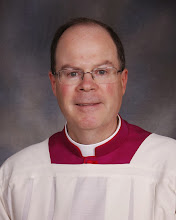
A few years back, the Canadian armed forces ran a recruiting campaign with the enthusiastic slogan “There’s no life like it!” Those words express my feelings about the priesthood, even after nearly thirty years.
Daily satisfactions abound, but last weekend I had an experience that tied together three decades of priestly joys.
Every year the Archbishop gives awards to two altar servers nominated from each parish in recognition of their dedication. I’ve never been able to attend the celebration at the Cathedral; at first it conflicted with our parish Mass, and in recent years with the diaconate formation weekend.
The servers of the year from Christ the Redeemer Parish were Emma, whose quiet faithfulness to serving weekday Masses is exemplary, and Gabriel, who stands out for his particular love of serving and the reverence he shows at Mass.
Gabriel attends our parish school, so when I saw him last week I explained why I wouldn’t be there to see him receive the award. He nodded respectfully, but I could see his disappointment, so decided to steal away from the diaconate group and drive back to the city on Saturday morning.
After watching proudly as Emma and Gabriel were honoured by Archbishop Miller, I popped in to the reception that followed Mass. As I waited for the group picture to finish, a man came up and greeted me warmly. I recognized him right away as Marty Cayer, a parishioner at my first parish, whom I’d married to Lora, a lovely girl whose family were also very fine parishioners at St. Patrick’s.
Marty and I were reminiscing when Gabriel appeared. As I made introductions, I did some hasty math and realized to my astonishment that Marty, now 40, had been exactly Gabriel’s age when he served Mass for me at St. Pat’s with much the same devotion and loyalty.
The coincidence—is that really the right word?—hit me with great force, and a wave of emotion came as I tried to explain to young Gabriel what it meant to a priest to stand with two “bookends” embracing three decades of ministry as a priest.
I suspect that young parishioners would be very surprised to know just how much we treasure their love and respect for us as priests, and what it means to see them grow as we ourselves age.
Life permits me only the occasional meeting with Marty and Lora, but they are part of the fabric of my life. And Marty has contributed one of my favourite memories from the eight happy years I spent at St. Pat’s, a story with which I will end this little reflection.
It was Christmas, 1986, at Shaughnessy Hospital, where I was taking Holy Communion to a group of residents, mostly veterans. I’d brought Marty along as a server because I thought these elderly men, some without families, would welcome the sight of a youngster on Christmas morning. All went well until an old man all but commanded Marty—a server, not a chorister—“sing us a song!”
Marty had as much enthusiasm for a solo performance as any 11 year-old boy. But with no hesitation, he pulled back his shoulders and started to sing in a loud clear voice.
What carol he sang, I cannot remember. But the moment I will never forget.
Wednesday, September 16, 2015
Sunday, September 6, 2015
Ears to Hear? (23.B)
Father Paul was on holidays this week, so I found myself eating dinner in front of the TV.
That wasn’t all bad, though. It gave me the chance to watch a few episodes of Father Brown, the BBC drama that features the priest-detective created by the great Catholic writer G.K. Chesterton.
Last night, the mystery centered on a German priest who came to preach in Father Brown’s parish in an English village. It’s not long after the end of the World War II, so feelings are still running high. Although Father Brown welcomes him warmly, the parishioners are another thing entirely.
The worst offender is Mrs. McCarthy, the nosy and bossy parish secretary. She makes one anti-German remark after another in a stage whisper that the visiting priest can’t fail to hear. The housekeeper treats him badly even after he bandages her wounded hand. And various townspeople snub him every chance they get.
Their behavior isn’t hard to understand or even to forgive, so soon after the war. What’s really troubling is that they are all Catholics. We see them at Mass, at church socials, and in the rectory. But they do not see the contradiction between their faith and their actions.
We could say they were blind. Blinded by anger or pain or loss, but blind nonetheless. They are blind to this opportunity to live the Gospel they profess to believe. Mrs. McCarthy has said the words “forgive us our trespasses as we forgive those who trespass against us” thousands of times, but she is deaf to what they mean in a concrete situation.
When I do or say something I know is wrong, I am sorry for it. I apologize or mention it in confession, and I resolve not to do it again. But what about the times when I am blind to what I’m doing, or deaf to the demands of the Gospel?
This, to me, is something very scary. There’s a line in Psalm 19 that I pray with passion: “who can detect all his errors? From hidden faults acquit me.”
Worst of all are sins that masquerade as virtues. It’s hard to dislike Mrs. McCarthy, because, as the saying goes, “she means well.” But all too many of her well-meaning actions are the fruit of her own weaknesses and insecurities—they serve her need for recognition rather than the needs of others.
Today’s readings might have done her some good if Father Brown had read them at Mass in his little parish church. His parishioners might have understood that only Jesus can open their eyes to themselves, and unplug their ears to the full force of his message.
And then again, maybe not. Many of those astounded by the miracle Jesus works in today’s Gospel did not recognize that they also needed healing, though not of a physical sort. Not all of those who heard him preach chose to be Christ’s disciples—which is why he said “Let anyone with ears to hear, listen!”
Will today’s readings do much good for us? Maybe, maybe not. I am nothing like Father Brown, except in the size of my current waistline, but I think we all have much in common with his parishioners. We hear more than we listen; we see more than we understand.
The answer to the question comes in a short passage from the First Letter of St. John. In this letter, the apostle proclaims “what we have heard, what we have seen with our eyes, what we have looked at and touched with our hands, concerning the word of life.” Yes, he has heard the word of life, but he has also looked — contemplated—and touched—experienced—this life-giving word.
To put the teaching of Christ into action—whether we’re talking about loving our enemies or loving our neighbours—we need to do more than read Scripture or listen to homilies. We need the personal encounter that the deaf man had with Jesus—a personal and private encounter where he can heal what needs to be healed in us and set us free from what makes us prisoners.
Like the deaf man, we need the healing touch of Jesus if we’re going to really hear the Gospel we listen to every Sunday. Only his personal touch brings the fullness of joy that Isaiah describes in our first reading.
Let’s ask ourselves whether there are areas in our lives where we’re deaf to Jesus or blind to the needs of others.
Last week, a single painful photograph of a drowned child opened the eyes of the world to the needs of refugees. Christians do not depend on the news media to make them aware of their responsibility to help the suffering. What we need is the touch of Christ, the grace that truly opens our eyes and ears to the Word by which we profess to live.
I probably should end with that prayerful thought, but I want to go back to Father Brown and his parishioners for a moment. Although they weren’t on their best behavior last night, there is much about them to admire, and they do come off very well in regard to today’s second reading.
St. James warns against an obvious evil that can easily divide a Christian community—favoring the rich or powerful. It contradicts God’s love for the poor and puts up barriers between brothers and sisters in the Lord. Some of the Church’s problems in other countries are connected to the special treatment that landowners and nobles received when they went to Mass.
But there’s no sign of the problem in Father Brown’s parish, where Mrs. McCarthy is just as rude to the local countess, Lady Felicia, as she is to everyone else. And there’s something quite significant about the fact that Lady Felicia’s chauffeur joins her at Mass.
That wasn’t all bad, though. It gave me the chance to watch a few episodes of Father Brown, the BBC drama that features the priest-detective created by the great Catholic writer G.K. Chesterton.
Last night, the mystery centered on a German priest who came to preach in Father Brown’s parish in an English village. It’s not long after the end of the World War II, so feelings are still running high. Although Father Brown welcomes him warmly, the parishioners are another thing entirely.
The worst offender is Mrs. McCarthy, the nosy and bossy parish secretary. She makes one anti-German remark after another in a stage whisper that the visiting priest can’t fail to hear. The housekeeper treats him badly even after he bandages her wounded hand. And various townspeople snub him every chance they get.
Their behavior isn’t hard to understand or even to forgive, so soon after the war. What’s really troubling is that they are all Catholics. We see them at Mass, at church socials, and in the rectory. But they do not see the contradiction between their faith and their actions.
We could say they were blind. Blinded by anger or pain or loss, but blind nonetheless. They are blind to this opportunity to live the Gospel they profess to believe. Mrs. McCarthy has said the words “forgive us our trespasses as we forgive those who trespass against us” thousands of times, but she is deaf to what they mean in a concrete situation.
When I do or say something I know is wrong, I am sorry for it. I apologize or mention it in confession, and I resolve not to do it again. But what about the times when I am blind to what I’m doing, or deaf to the demands of the Gospel?
This, to me, is something very scary. There’s a line in Psalm 19 that I pray with passion: “who can detect all his errors? From hidden faults acquit me.”
Worst of all are sins that masquerade as virtues. It’s hard to dislike Mrs. McCarthy, because, as the saying goes, “she means well.” But all too many of her well-meaning actions are the fruit of her own weaknesses and insecurities—they serve her need for recognition rather than the needs of others.
Today’s readings might have done her some good if Father Brown had read them at Mass in his little parish church. His parishioners might have understood that only Jesus can open their eyes to themselves, and unplug their ears to the full force of his message.
And then again, maybe not. Many of those astounded by the miracle Jesus works in today’s Gospel did not recognize that they also needed healing, though not of a physical sort. Not all of those who heard him preach chose to be Christ’s disciples—which is why he said “Let anyone with ears to hear, listen!”
Will today’s readings do much good for us? Maybe, maybe not. I am nothing like Father Brown, except in the size of my current waistline, but I think we all have much in common with his parishioners. We hear more than we listen; we see more than we understand.
The answer to the question comes in a short passage from the First Letter of St. John. In this letter, the apostle proclaims “what we have heard, what we have seen with our eyes, what we have looked at and touched with our hands, concerning the word of life.” Yes, he has heard the word of life, but he has also looked — contemplated—and touched—experienced—this life-giving word.
To put the teaching of Christ into action—whether we’re talking about loving our enemies or loving our neighbours—we need to do more than read Scripture or listen to homilies. We need the personal encounter that the deaf man had with Jesus—a personal and private encounter where he can heal what needs to be healed in us and set us free from what makes us prisoners.
Like the deaf man, we need the healing touch of Jesus if we’re going to really hear the Gospel we listen to every Sunday. Only his personal touch brings the fullness of joy that Isaiah describes in our first reading.
Let’s ask ourselves whether there are areas in our lives where we’re deaf to Jesus or blind to the needs of others.
Last week, a single painful photograph of a drowned child opened the eyes of the world to the needs of refugees. Christians do not depend on the news media to make them aware of their responsibility to help the suffering. What we need is the touch of Christ, the grace that truly opens our eyes and ears to the Word by which we profess to live.
I probably should end with that prayerful thought, but I want to go back to Father Brown and his parishioners for a moment. Although they weren’t on their best behavior last night, there is much about them to admire, and they do come off very well in regard to today’s second reading.
St. James warns against an obvious evil that can easily divide a Christian community—favoring the rich or powerful. It contradicts God’s love for the poor and puts up barriers between brothers and sisters in the Lord. Some of the Church’s problems in other countries are connected to the special treatment that landowners and nobles received when they went to Mass.
But there’s no sign of the problem in Father Brown’s parish, where Mrs. McCarthy is just as rude to the local countess, Lady Felicia, as she is to everyone else. And there’s something quite significant about the fact that Lady Felicia’s chauffeur joins her at Mass.
Even a woman just out of prison is welcomed on Sunday with only a sniffy look or two.
For all our failings, our parishes do a pretty good job of living out the wise advice St. James gives us today, with rich and poor sharing a pew, and a sense of equality among God’s people.
As James Joyce wrote in Finnegan’s Wake, Catholic means “Here comes everybody.” Which is just as things ought to be.
Sunday, August 30, 2015
After the Storm (22.B)
Some of you got up this morning in houses without power. It’s what we sometimes call a first-world problem, but even so it’s not much fun.
We hardly notice how much we depend on power to cook, to clean, and to communicate. But we sure notice when it fails. First the light flickers, then the house goes dark. If the power goes out at night, the first thing you notice is often that the clock beside the bed is dark.
But what about spiritual power failures? How do we notice when there’s no power flowing in our spiritual lives?
In today’s Gospel, Jesus teaches that religion can have its power knocked out by a number of things. Some of them are as obvious as the serious sins listed at the end of the Gospel reading. But others are much more subtle, and much more dangerous.
When the power goes out to a digital clock, it either goes dark or starts to flash. Back in the days when some clocks plugged in to the wall, they just stopped—if you didn’t notice, you’d have the time all wrong. That’s what happens when religion becomes ritual.
Jesus is talking about religion that is not powered by authentic worship when he warns against lip-service. He says that getting the ritual right isn’t what God wants from us.
Even something as basic as our coming to Mass doesn’t please God if we don’t live the faith in our daily lives by keeping his commandments.
That much of this Sunday’s message is obvious enough; in the Gospels Jesus warns us many times against hypocrisy. And St. James sums it up beautifully in one short phrase: be doers of the word, and not merely hearers.
But the other half of the message is also important. The power that we need to keep our faith functioning doesn’t come from us anymore than we generate the power in our homes. Just as we’re blessed to have an abundant supply of electricity available for our needs, we have spiritual power flowing into our hearts without so much as a Hydro bill.
The commandments are a gift, not a burden, because they supply power to our daily lives, guiding and shaping our choices according to God’s plan. In our first reading today, Moses is telling the people they are blessed to have God’s law—other nations will be jealous of them, because he is so close and so willing to show them the path they need to follow.
I’m sure you’ll agree that there aren’t many people who look at us Catholics and envy our moral code. But there are some, and there will be more—if we ourselves are faithful, and show them the fruits of Christian living. As the consequences of immorality continue to weaken society we can look to a day when many outside the Church will recognize the blessings we enjoy, just as Moses predicts.
First, we ourselves need to appreciate the moral teaching of Christ and his Church as a beautiful gift—as something coming down to us from above, a gift from the Father of lights who doesn’t want us to walk in darkness.
God has given us birth, St. James says, “by the word of truth.” Those who don’t live in the truth, he seems to say, aren’t even fully alive.
He tells us to welcome the word that has the power to save our souls. I don’t know about you, but I’m more likely to complain about that word than to welcome it. Like every sinner, I’d rather do what I want than what the saving word commands.
But that short-circuits God’s plan to supply us with not only the power we need for daily life—the power to stand firm, as our Psalm says, and the power of wisdom and discernment, as we hear Moses say—but also the power to save our souls.
Today is a good day to check our spiritual wiring. Are we letting the graces of Sunday Mass flow throughout the week? Are we coming to Sunday Mass ready for true worship and all that demands, including charity to others, especially the poor?
These are difficult and demanding questions. But we can answer them with the power than comes from God.
Thursday, August 13, 2015
The Eucharist Unites (19.B)
It’s been more than thirty years since I first saw the chain letter about “the perfect pastor,” but it still makes me smile.
The perfect pastor preaches exactly 10 minutes but always say everything that needs to be said.
He condemns sin boldly but never hurts anyone’s feelings.
He works from 8 am until midnight and is also the church janitor.
The perfect pastor makes $200 a week, wears good clothes, drives a good car, buys good books, and donates $100 a week to the church.
He is 29 years old and has 40 years’ experience.
The perfect pastor has a burning desire to work with teenagers, and he spends most of his time with senior citizens.
He makes 15 home visits a day and is always in his office to be handy when needed.
The chain letter concludes "If your pastor does not measure up, simply send this notice to six other churches that are tired of their pastor, too. Then bundle up your pastor and send him to the church at the top of the list. If everyone cooperates, in one week you will receive 1,643 pastors.
"One of them should be perfect!"
Even if that joke is older than the internet, I couldn’t resist it—because we’re hearing a lot at Mass lately about complaining.
In last week’s first reading, complaining was front and center. The whole assembly of Israel complained against Moses and Aaron. We’d rather have died, they told them, than end up following you into the desert.
This week, Jesus is the target of the people’s complaints. They think he’s forgetting his humble origins, and making ridiculous claims. And, like the Israelites, they’re gossiping and grumbling.
The gossip and grumbling carry on in next Sunday’s Gospel, which continues the story. And by the end of the story, many have turned away from Jesus.
Such is the power of complaining!
For almost a year, a committee of professional and dedicated parishioners have been overseeing an engineering study of our parish buildings to judge their ability to withstand an earthquake. We’re lucky to have modern buildings, but for some parishes seismic upgrades will cause a great hardship.
But no earthquake could destroy a parish half as well as the division that comes from complaining, from the kind of undertow that went on while Jesus preached about himself as the Bread of Life.
There are many, many things for which I am thankful as I look back on eight years as pastor here. But the thing for which I am most thankful—by far—is that the community has never been divided.
One reason I’m glad is that I have very little stomach for fighting and feuding. I can hardly imagine the pain—and the courage—of those priests who have had to minister in parishes split by factions or serious disagreement.
But the number one reason is this: a divided community, a complaining community, is not a truly Eucharistic community.
Celebrating Mass with people who have broken into isolated groups—and I heard of a parish back East where there was a group that came to Mass with picket signs—contradicts an essential truth about the Eucharist: it draws us into communion not only with God but with each other.
When most Catholics hear the word “communion” they think first of “Holy Communion,” of the consecrated Host they receive at Mass. But communion is a huge word: you could write a book about it.
When we approach the altar to receive the Sacred Host, we enter more deeply into communion with Jesus, of course. But we also profess our communion with his Church.
And to some extent, we show our communion with each other in this parish community. Saints and sinners, rich and poor, young and old, even Liberal, Conservative and NDP!
A little grumbling is an ordinary aspect of parish life—everyone is entitled to his opinion. I was delighted by the strong consensus that supported the renovations of our sanctuary some years back, since that’s always a tricky business.
But there was still one man who came up to me and said “Where would we be if every single Pope made changes to St. Peter’s?”
I told him very gently that I knew St. Peter’s like the back of my hand, and could assure him that every single Pope did make changes to St. Peter’s, with the possible exception of the month-long pontificate of John Paul I.
We are friends to this day.
In today’s second reading, St. Paul gives two lists, one bad, one good. In the first list he includes bitterness, anger, arguing and slander. In the second, kindness, tenderness and mutual forgiveness.
I can say that I’ve seen very little from the first list and everything from the second in my time at Christ the Redeemer. Surely this is a fruit of the Eucharist we receive together each week.
As we ponder the great gift of the Bread of Life, let’s also be grateful for the blessings of unity and charity in our parish, and in our homes.
Sunday, August 2, 2015
Crucial Conversations With Jesus (18.B)
About this time last year I went to a conference in Chicago called the Global Leadership Summit. One of the most impressive speakers was Joseph Grenny, co-author of a best-selling book called Crucial Conversations. The book defines a crucial conversation as “a discussion between two or more people where (1) stakes are high, (2) opinions vary, and (3) emotions are strong.”
I think that the crowd in this Sunday’s Gospel is having a crucial conversation with Jesus. (1) The stakes are very high—he’s just fed 5,000 people with a few loaves of bread and a basket of fish.
(2) Opinions vary—we know that Jesus always had his opponents, and there are doubters in the crowd who aren’t satisfied with the recent multiplication of the loaves and fish: they want their own miracle.
And (3) emotions are strong—obviously. The people are both physically and spiritually hungry, and this new rabbi might have the answer to a lot of their problems.
The authors of the book tell us that crucial conversations matter a great deal. The consequences of getting them wrong can be severe. But stepping up to a crucial conversation and handling it well can change our lives.
So what do you think? Is this crucial conversation on the shore of the Sea of Galilee going well or poorly? Will it change the lives of those who are speaking with Jesus?
It doesn’t get off to a great start. The people are confused when they find Jesus, because they haven’t a clue how he got to the other side of the lake. We started reading the sixth chapter of John’s Gospel last week, and we continue it today and for the next three weeks—but the Lectionary cut out the story of Jesus’ crossing over by boat.
So their first question isn’t particularly helpful: how on earth did you get here?
But Jesus, who is the master and the model of all crucial communication, follows the first rule in the book: start with heart. He doesn’t get side-tracked by the unimportant issue of how he got across the lake, but turns the conversation immediately to what it’s really about: Him.
There’s a contemporary Christian song by Matt Redman that has this simple refrain: “I'm coming back to the heart of worship—And it's all about you, it's all about you Jesus.”
How often do we sidetrack crucial conversations about faith or about the Church by forgetting that it’s all about Jesus?
Throughout his dialogue with the crowd, Jesus keeps bringing the conversation back to him. The people ask what they should do, but instead he tells them to believe in him.
The people ask for another physical miracle, but Jesus tells them about the greatest miracle of all, the Word made flesh.
We all need to have a crucial conversation with God today—a conversation that starts with our own hearts.
We need to tell the Lord what we hunger for. We need to look into our hearts and find the empty places that need to be filled.
Martin Luther King once said that “our lives begin to end the day we become silent about things that matter.” That’s true of our spiritual lives, too. If we won’t talk to God about the things that matter to us most, we can’t have much of a spiritual life.
Of course—and this is a key to any crucial conversation—we need to listen.
What does Jesus say to you this morning as you sit here at Mass? Are his words in today’s Gospel an answer to some of your doubts and fears?
“Whoever comes to me will never be hungry, and whoever believes in me will never be thirsty.”
Are we here expecting to be fed? Here to break the bread of God has come down from heaven and gives us life? Because if we’re not, we are overdue for a crucial conversation with Jesus, the Bread of Life.
We live in a post-Christian world where the stakes are high, opinions vary, and emotions are strong. Our friends and neighbours, even some members of our own family, think us fools or worse for going to church.
In such a climate, we will not persevere in our faith journey unless we know why we are here, what we have been promised, and talk freely with Jesus in this great sacrament of his body and blood.
The heart of our worship today, and every day, is Jesus. It’s all about him.
Sunday, July 26, 2015
God Responds to Hunger and Thirst (17.B)
Sometimes a homily just writes itself.
This Sunday’s first reading begins with a man bringing the first fruits of his harvest to the prophet Elisha during a time of famine. Can you imagine what I thought when a parishioner and his young daughter arrived at the rectory door yesterday with a bag of potatoes, one of carrots, and the largest zucchini you’ve ever seen?
Turns out that this fine youngster has a plot in the garden devoted to growing things for the church! And while we don’t have a famine, we certainly have a drought.
It almost goes without saying that I was very touched and grateful. Unlike Elisha, however, I can’t work a miracle and share the fresh produce with you; I did divide it with a needy family, though, in the spirit of our readings today.
But I share the experience with you to help us understand the message the Scriptures have for us today. And perhaps the unusual weather can help us as well, since drought is the usual cause of famine and we’ve had a taste of that even though we haven’t gone hungry.
In both the first reading and the Gospel people are hungry. In Elisha’s time they are starving, in today’s Gospel the crowd’s just missed their lunch. Both Elisha and Jesus provide food miraculously, and so abundantly that there are leftovers. Human needs get met through the power of God.
That wouldn’t be a bad place to stop: recognizing God’s power is basic to discipleship. But there’s much more to be learned from the Word this morning.
What do we really know of famine or hunger? For that matter, what do we know of drought, when even the water restrictions we currently face—while it rains, no less—permit hand-watering of our gardens? (A lucky thing, or those vegetables wouldn’t have made it to my door.)
To benefit fully from the message of today’s readings, we need to look beyond their literal meaning. And we might start by thinking what it means to be spiritually dry or spiritually hungry. These are the worst droughts and famines of all.
Sure, Jesus filled the stomachs of the hungry crowd. But is there any doubt he first filled their hearts with hope?
Elisha’s mentor, the prophet Elijah, made rain fall in torrents after a years of drought; but it was his prophetic word and not just water that he gave to Israel.
We can and did pray for rain during these dry times in B.C. In fact, several days after we did so at Mass my entire family was soaked while we watched Theatre Under the Stars at Stanley Park. But what God really wants us to pray for is hunger and thirst—a burning desire for spiritual food and drink.
Today’s Gospel reading is the first of five passages from the Gospel according to John that are all about the Eucharist. For five Sundays we’re going to be talking about the Bread from Heaven, the real food and real drink that truly satisfies the hungry heart.
But we can talk all day without it making a difference if we’re not in touch with our hunger and thirst. Have you ever been too busy to eat? All of a sudden you realize you’ve missed lunch without so much as a pang of hunger?
And the doctors warn us that we need to drink water on hot days even when we don’t feel thirsty.
The same is true of the spiritual life. If we only turn to God when we feel the need, we will be malnourished and dehydrated.
The Archbishop of Detroit, Alan Vigneron, preached a homily that asked this question about spiritual dryness: “Are we not bored with Christ? Is not that the condition that the Holy Spirit needs to heal in our time? Have we not come to a time when, sad as it is, hearts no longer seem restless, but rather more drugged and befuddled?”
Together with Pope Francis, Archbishop Vigneron calls us to rediscover the joy of the Gospel. Quite specifically, he says we need to learn how to expect everything from God, even God himself. We need to ask the Holy Spirit to stir into a flame the embers of our faith if we are among the many “who seem to be all-in and all-committed.”
In his first homily here, Father Paul warned against “having a consumer mentality with regard to church.” He said that it’s “very easy for us to think in this way because that is often how things work in the world. But the church is not a service provider; it is the Mystical Body of Christ and the People of God who journey together toward God.”
How do those of us who are “all-in and all-committed” become more serious about that spiritual journey? We have gathered in church this morning—and so all of us are already headed in the right direction. But many of us feel things could be better.
This is exactly what we need to focus on: the thirst for more, the hunger for a closer relationship with Jesus. The next four weeks can deepen our love for the Lord in the Eucharist if we listen eagerly to what Jesus teaches us about the gift of his Body and Blood.
God will not send you away hungry or thirsty. As the psalm says, he opens wide his hand, and grants the desires of all who live.
Sunday, July 5, 2015
Prophetic Courage (14.B)
If Pope Francis is looking for some
exercise, he should take up surfing. Because one thing’s for sure—the Holy
Father is riding a wave right now.
The world has reacted with praise to
his encyclical on the environment, called Laudato Si, and the Pope’s personal popularity is enormous. We Catholics are
surfing right along with him, happy to hear folks who generally despise the
Church tell us “we love your Pope.”
All this is good. Jesus wanted the
Gospel to be attractive—he said “My words are spirit and they are life (John
6:63). Crowds loved to hear him preach.
Pope Francis also wants the Gospel
to be attractive—he wrote “The joy of the gospel fills the hearts and lives of all who encounter Jesus.”
It’s all good, but it won’t last,
unless Pope Francis has a very short pontificate. And this Sunday’s readings
help us understand why.
I’m sure the first reading today
caught the Holy Father’s eye. He would recognize right away a connection with Ezekiel.
Poor Ezekiel was a “good news/bad news” prophet. God did not ask him to make
people comfortable but to disturb them with his message.
Although he was preaching to his
fellow exiles far from their homeland, he had to give them the straight goods: He
told his fellow Israelites that their misery was not due to God’s failure “but because
their own sins and their own infidelity.” (Scott Hahn, ed., Catholic Bible
Dictionary, 273)
It’s a fair bet that that Ezekiel
was not popular. He didn’t appear to have been persecuted like some other
prophets, but surely the pain of speaking harsh truths day after day to his
friends and neighbours was worse in some ways than being flogged or exiled.
Today’s Gospel reminds serious Christians
that they’ll never be popular for long. Our message of repentance is no more
welcome today than two thousand years ago. Sometimes it will be the world—by
which today is meant the media, among other forces—that will take offense at
us. Other times it will be the state or the educational establishment, or employers.
With the increase in religious persecution
around the world, this is a good time to reflect long and hard on what the late
Cardinal Francis George said when he was Archbishop of Chicago: “I expect to
die in bed, my successor will die in prison and his successor will die a martyr
in the public square.”
But sometimes the persecution is
less dramatic, more like what Ezekiel had to deal with. Sometimes it will be
our own family members, our own neighbours, who cannot deal with it when we
hold fast to the faith. Jesus has told us clearly the price the faithful
Christian may have to pay, even at home.
A hot summer day is no time to
preach a long homily about misunderstanding and persecution! But in our
thoughts and prayers today, let us ask God to remind us that every wave will
eventually crash and that his power is made perfect in weakness.
Let us ask for the courage to be
prophets who remain faithful to Christ and his message, in both good times and
bad.
Subscribe to:
Posts (Atom)


