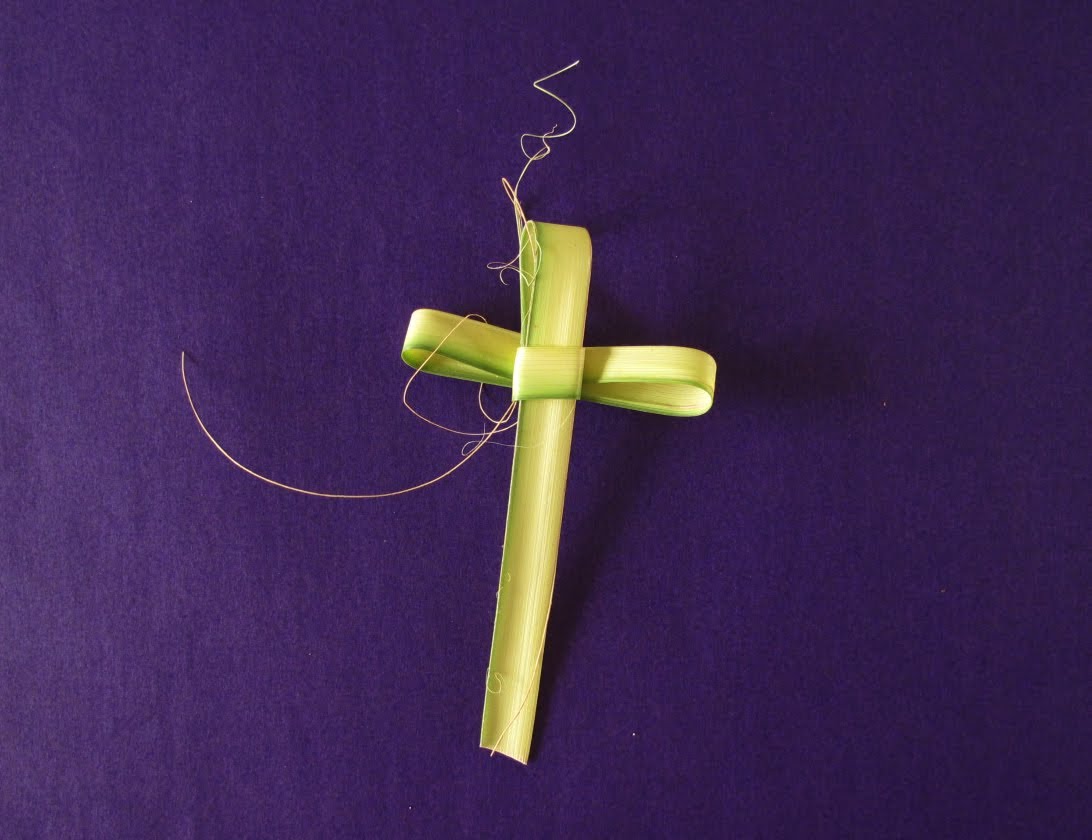
Friday, March 30, 2018
We WERE There When They Crucified the Lord (Good Friday)
Were you there when they crucified my Lord?
That haunting question comes from an American spiritual that was likely composed in the nineteenth century by African-American slaves, people who knew a great deal about sorrow and suffering.
The power of the hymn is seen in an interesting fact: it was a favourite of the great Hindu leader Mahatma Gandhi.
The hymn helps us to stand at the foot of the cross with Mary and Mary Magdalene and St. John, and to enter into Christ's passion not only with our heads but our hearts as well.
The words "were you there when they crucified my Lord?" are so moving that I once gave an entire homily on them. But today I would like to change them from a question to a statement: you were there when they crucified the Lord.
Every man, woman and child in church this afternoon was there on Calvary--not standing at the foot of the cross, but hanging on the cross with Christ. We were there when they crucified the Lord.
That may sound surprising. But it comes straight from St. Paul. If you are lucky enough to be with us for the Easter Vigil tomorrow, you will hear him say plainly in the Letter to the Romans that "we have died with Christ."
The Apostle tells us that "our old self was crucified with him." Can we hear those words and doubt that we were there, that our humanity hung on the cross in Christ?
The Letter to the Hebrews explains how this is possible. In the second chapter, it says Jesus "had to become like his brothers and sisters in every respect, so that he might be a merciful and faithful high priest... to make a sacrifice of atonement for the sins of the people."
In today's liturgy the Letter to the Hebrews anticipates an objection. We think that Jesus, the great high priest, must be unlike us in order to offer himself on our behalf. It anticipates the reaction of the Jewish people, who read in the Old Testament that the priest had to be set apart so he could relate to God.
These reactions are understandable, today's reading from Hebrews says, but they are wrong. Our priest, though he is the Son of God, is human in every way that we are, though without sin. He shared our flesh and blood, our human nature, to make us truly his brothers and sisters.
And so, we were there. There in our weakness, there in our sinfulness, there in our human flesh. Jesus took it all to the cross.
If I have convinced you, if Scripture has convinced you, there's still a final question. What difference does it make that we were there, there in our old self that was crucified with him?
First, let me answer with exquisite words from St. Melito of Sardis, an Asian bishop of the second century.
"For the sake of suffering humanity [Christ] came down from heaven to earth, clothed himself in that humanity in the Virgin’s womb, and was born a man. Having then a body capable of suffering, he took the pain of fallen man upon himself; he triumphed over the diseases of soul and body that were its cause, and by his Spirit, which was incapable of dying, he dealt man’s destroyer, death, a fatal blow," the saintly bishop wrote.
What joy, then, for us to be sharers in the cross of Christ--because it means we share also in his victory over sin and death, over fear and hopelessness.
At the Easter Vigil St. Paul has the last word on this. But I will give you a preview. He writes that our old self was crucified with Christ for a reason: "so that our sinful body might be done away with" [NAB]. He died that we might be free, that "we might no longer be enslaved to sin. For whoever has died is freed from sin" [NRSV].
We were there when they crucified our Lord. We were there when they laid him in the tomb. And we are there in his glorious resurrection, believing that if we have died with Christ we will also live with him, dead to sin and alive to God.
Monday, March 26, 2018
Non-homily for Palm Sunday (B)
I started to write a homily for Palm Sunday, but decided to take a different approach and ended up preaching without notes. But for those looking for some thoughts on yesterday's liturgy, I'm posting the homily I didn't deliver!
For many years I’ve heard the expression “we are Easter
people and alleluia is our song.” And it annoyed me every time I heard it. For some reason, it sounded like an advertising slogan or
jingle.
But since the phrase came to my mind in connection with
today’s homily, I decided to Google it and find out where it came from.
I’m more than a little embarrassed to say that the first hit was St John Paul
II – and even more embarrassed to admit that the second hit was St Augustine in the
fifth century.
I guess there’s no accounting for tastes, and mine
obviously aren’t that good.
But let me tell you why I was thinking about the phrase on Palm Sunday – the Sunday when we read the account of the Lord's passion and think
more about his suffering and death and than his resurrection.
Last week I opened for the first time a book that I
bought, used, about 25 years ago. It’s
called The Resurrection: A Biblical Study, and it was written more than 50
years ago. The reason I turned to such a venerable volume was that there are very few books, even now, about the
resurrection of Jesus – certainly far more has been written about his suffering
and death.
In fact, the author of the book, a French Redemptorist
named Durrwell, feared that we can almost forget that the resurrection is a
necessary part of our redemption in Christ. Father Durrwell wrote that “there
is a widespread idea that the resurrection is an epilogue – that the whole
mystery of our redemption took place on Calvary.”
Partly because of the influence of his book, I don’t
think that this idea is widespread among theologians anymore. But among ordinary
Catholics like ourselves, it’s certainly a risk – which is why I was using a
book about Easter while writing my homily for Passion Sunday.
I wanted to see if Father Durrwell would connect today's readings to the resurrection; and I was not disappointed. Actually, he doesn’t
make the connection – he points out that Saint Paul does, in the second reading (Phil 2:6-11).
Here’s what he said “The Epistle to the Philippians,
which gives the best account of the humiliations of the Son of God in the
flesh, gives a parallel account of their repercussions in glory.”
The parallel is clear in the text we’ve just heard. The
first two verses show how Christ’s humility and obedience lead him to the
cross. But the next three verses– connected to the first by the word “therefore” – state that God has exalted Christ, making him the sovereign ruler
of heaven, earth, and even the underworld.
We modern people have to struggle to get the full power
of Paul’s description of Christ and glory. We have no great respect for rulers,
and wouldn’t even think of genuflecting before them or bowing at their name.
Paul, on the other hand, it’s writing at a time of absolute rulers who demanded
absolute submission.
“The man who excepted humiliation of his own free will,
is established at the very summit of creation, in the power and glory of God,” writes Durrwell.
Thus do we need to connect the painful story of the passion with the glorious
exaltation of Jesus that completes the story for all time.
Sunday, March 18, 2018
It's All About Resurrection and Eternal Life (Third Scrutiny)
The morning paper has a story about a man who found his dream job. Rob Szpak was dazzled by a police dog when he was a kid, and now he runs the kennel for the Vancouver PD canine unit.
Not everyone loves their job. For centuries most people's work was too hard to love, and the hours too long. Now you meet many people who find meaning and fulfillment in their employment. Even social life can center on the workplace.
I hardly ever hear anyone point to the number one reason for going to work: to pay the bills. To support yourself and your family. The primary reason is almost in the background.
The same goes for a house. Until modern times, only the rich saw their homes as places of gathering, of comfort and of status. For the vast majority, a house kept out the rain and sheltered from the cold. Now, we hardly think of those primary functions at all.
And, I am afraid, the same goes for the Church. We can focus on what is secondary to its mission, and ours. Parishes today are places of community, education, good works, and social life. The Church itself teaches wisdom on a host of subjects, ranging from the environment to family life. All good--indeed very good. But might we sometimes lose sight of what's most important of all, of the central reason and purpose of the Church?
Let's test this out. I'll give you a few seconds to answer the question in your head. Why do I go to Church? What does my faith offer me?
I'm sure there are many good answers. But the perfect answer can only be "eternal life." That's the answer our two catechumens gave during the rite that accepted them as candidates for baptism.
Today's Gospel puts aside all the good reasons to be Christian and reminds the catechumens and every one of us of the number one reason: to live forever.
When's the last time you thought of that? Whether you are a young and healthy person, or a very old one with serious health challenges, in today's Gospel Jesus promises you the one thing that matters more than everything else: "Those who believe in me, even though they die, will live, and everyone who lives and believes in me will never die."
The death of Billy Graham last month was front-page news. His preaching was fairly simple, and reached its climax with one question: "will you accept Jesus Christ as your personal Savior?"
If you asked "Savior from who or what," Billy Graham might well have read you the story of the raising of Lazarus, in which Martha receives the promise of salvation on behalf of all of us.
And if you asked, "how do I know?", the famous evangelist could then have pointed you to what Jesus tells Martha : "I am the resurrection and the life." How do I know I will rise from death to live forever? Because Jesus rose first.
This is our Q and A for the fifth Sunday of Lent. The Church invites those preparing for baptism--and every one of us who are already baptized--to turn to the fundamentals of faith.
It takes a long time to listen to the whole story of the raising of Lazarus, but only a sentence to sum up its lesson: Jesus promises that all who believe in him will live forever. When he makes that promise in Bethany, he secures it with the rising of Lazarus.
And when he makes the promise to us and all the world, he secures it with his own resurrection from the dead.
This is where a short
homily would end. And it will, at the 11 o’clock Mass when we celebrate the
third and final scrutiny with our two catechumens. But we have a little extra
time, so let me add a secondary point.
We might ask ourselves why we fear death so much if we really believe that Jesus has conquered it. Do we lack faith?
The Gospel this morning doesn't suggest that Christians are supposed to laugh at death and deny its pain and sadness. We were created to live--as we know, God's original plan did not include death. So death remains something we naturally resist, even if our supernatural faith is strong.
Don't we see this in the tears Jesus sheds for Lazarus?
Don't we see this in the tears he sheds in the Garden of Gethsemani? Christ weeps not only about his passion, but about his death itself, despite his complete faith in the Father.
Shortly after the raising of Lazarus, Jesus contemplates his "hour," the hour of his death, and he says "Now my soul is troubled" (Jn. 12:27). And the Letter to the Hebrews says that he "offered up prayers and supplications, with loud cries and tears, to the one who was able to save him from death" (Heb. 5:7).
Our faith in Christ's resurrection, and in our own, gives us all we need to face death and sorrow with courage and hope; but it does not eliminate the sadness of death until we dwell in the heavenly city where God will wipe away every tear and "death will be no more" (Rev. 21:4).
Sunday, March 4, 2018
Let's take the plunge (First Scrutiny)
I’m holding in my hand a
lovely daily missal. It was printed when I was two years old, but the rite of
baptism is exactly the same rite used when I was baptized.
I found three interesting
things in the missal. The first was obvious: the sacrament was celebrated in
Latin. But the other two were more remarkable. First, there was no special rite
for an adult. More or less, an adult would be baptized in almost the same way
as a baby.
And second, the missal makes
it clear that the rite of baptism—taking perhaps fifteen minutes—was a
boiled-down version of ancient ceremonies that developed during the centuries
before infant baptism became the norm.
Even the short commentary in
the missal swept me up into the drama of a baptism in the early Church, where a
series of rites prepared the candidate for the amazing moment when he or she
was baptized at the Easter Vigil. The rite for the baptism of infants seemed a
very poor substitute for adults.
Happily, the Church
eventually noticed the problem. In 1962, the Holy See provided new ceremonies
for adults and began the restoration of the catechumenate, the period of preparation
for baptism. Just a year later, the Second Vatican Council ordered further
renewal of the rites of adult baptism and of the catechumenate.
Which brings us to the
question: what does all that have to do with me? What does this mean for our
parish in 2018?
You are about to find out. Because
the renewal of the rites of adult baptism have as much to do with the parish
community as they do with the person seeking baptism.
And because you’ve just heard
one of the most obvious aspects of the reformed rites—the Gospel of the
Samaritan woman, “the woman at the well.”
Other parishes, not blessed
by someone seeking baptism at the Easter Vigil, didn’t read that story this
morning. They listened to the readings for the Third Sunday of Lent, with an
entirely different message. But we are celebrating what’s called the first
scrutiny, one of the restored rites for the Christian initiation of adults.
The scrutinies are rites that
invite the catechumen—in our parish, John Lesow—to begin an intense process of
self-searching and repentance. They are intended to strengthen John as he
prepares for baptism—to deliver him from temptation, to help complete his
conversion, and to ensure he perseveres in his decision “to love God above all.”
(RCIA, 128)
At this Mass each Sunday we
will offer special prayers for John, and I will bless him with a prayer of
exorcism, praying he be freed from the effects of sin and given the grace of a
pure heart.
And today and for the next
two weeks, John and each of us will listen to the same three Gospels that the catechumens
heard in the ancient Church on these Sundays of Lent.
Today’s gospel of the
Samaritan woman shows us Christ, the living water that gushes up to eternal
life. Next Sunday we read the story of the man born blind, in which Jesus
reveals himself as the light of the world. And when we celebrate with John the
third scrutiny, two Sundays from now, we will see Lazarus raised from the dead
by Jesus, who reveals himself as the resurrection and the life.
As those three powerful
stories enter deeply into our hearts, we will be praying for John to be filled
with Christ, the living water, the light of the world, and the resurrection and
the life. And we should—really we must—pray the same thing for ourselves.
Today we can ask whether the
new life we received at baptism—as infants, most of us—is a gushing spring or a
tiny trickle. If you’re in church this morning, the living water is probably
still flowing, but is it really and truly satisfying your thirst?
I’ll give you a homespun
example. A parishioner has a sauna at the back of his house, just above a
stream that flows by his property. When he can’t take any more heat, he runs
down to the stream to cool off. The only problem is that the stream’s only
about two feet deep and he’s more than six feet tall.
So he has to lie down flat,
which takes a lot of courage when the water’s freezing. I’m sure he’d love to
build a dam—though he’d get in a lot of trouble—so that he could plunge into
the water, so that he could be completely exhilarated by the experience.
Jesus wants our brother John
and each of us to take the plunge, to be exhilarated by Holy Spirit and to experience deeply the Good
News of our salvation. That’s the point of Lent, for both our catechumen and
ourselves.
What Jesus promises the woman
at the well is not a glass of lukewarm water in the heat of the noonday sun. It’s
a cold, clear fountain of water that quenches her deepest thirst and hunger.
And what He promises the
Samaritan woman he promises us. If we’re
not allowing the Holy Spirit to satisfy our thirst for joy, for peace, for clarity about
our crazy lives, then we’re not drinking deeply from the well of salvation.
Let me close with the warning
delivered in our first reading from the Book of Exodus. Let’s look at the background to the angry
complaining by the thirsty Israelites. Do you know the phrase “but what have
you done for me lately”? That’s Israel’s complaint to the God who has delivered
them from Egypt and given them victory over Pharaoh at the Red Sea.
That’s their complaint to God
after he gave them fresh sweet water at Marah and Elim (Ex 15: 22-27), and
quail and manna for forty years in the desert (Ex 16). Yet now they’re thirsty
and quarrelling again.
It’s a bit ridiculous when
you think about it, but I don’t really blame them—I confess that I sometimes
find myself asking God “What have you done for me lately?”
The only answer God has to
that is coming up fast—the saving passion, death, and resurrection of his Son,
into which we are baptized and into which John will be baptized at the great and
glorious Easter Vigil.
Sunday, February 25, 2018
If God is For Us... (Lent 2B)
I
often talk with the music teacher at St. Anthony’s School about getting me a
role in a school play. Ever since I
played St. Joseph in the Christmas pageant—costumed in a cozy bathrobe that I
still wear—I’ve been hoping for another chance to get on stage.
What
I really hope is that the school will perform the musical Oliver!, because I’m
dying to appear in this adaptation of the Charles Dickens novel Oliver Twist. As a youngster I
auditioned for the role of Oliver, but the director quickly decided I looked
too well-fed for the role. But in high school, I played the lovable villain Fagin
with considerable success, if I do say so myself.
However,
there’s no chance of my dream coming true until the copyright owners re-write
the play, because the story ends with the violent murder of the heroine,
Nancy. And we can’t have the children
watching that.
At
least that’s the way modern thinking goes. As kids we read Grimm’s Fairy Tales—and
they were certainly grim. We heard a witch threaten to eat Hansel and Gretel, a
wolf threaten to eat Little Red Riding Hood, and a king threaten to cut off a
girl’s head if she won’t marry the goblin Rumpelstiltskin—but somehow we
survived.
Children
have a way of filtering out the scary bits of familiar stories.
But
today I wonder whether adults do that, too—and whether it’s a good thing when
it comes to the Word of God.
I
watch the faces of the congregation whenever I read the story of Abraham and
Isaac, and no one ever looks shocked or appalled. Yet find me a tenser moment
in the whole Old Testament than when Abraham takes up the knife. If we really
listened, we’d gasp in horror.
The
second reading today helps us stop and think about the meaning of the first
reading—about how Abraham’s sacrifice connects to the sacrifice of Jesus on the
cross. Not only that: it helps us understand how the enormity, the awfulness,
of Calvary should affect each of us in a personal way.
After
hearing the story of Abraham and Isaac, we haven’t a shred of doubt that
Abraham loved God more than anything in the world, even his son. We understand
why he is called our father in faith, and how he is a model of obedience for
all time.
But
St. Paul tells us that the Crucifixion should convince us that God loved us
with an incomparable love, and that this love is still being poured out on us
and for us. Paul’s question says it all “He who did not withhold his own Son,
but gave him up for all of us, will he not with him also give us everything
else?”
The
translation is a bit difficult. Listen to the more flowing words in the
Jerusalem Bible: “Since God did not spare his own Son, but gave him up to
benefit us all, we may be certain, after such a gift, that he will not refuse
anything he can give.”
From
my bedroom window in the seminary in Rome, I could see the front of St. Paul’s
Basilica. At the very top of the church is a cross and the words “Spes unica”—the
cross our “only hope.”
To be a Christ-follower means wrestling with the mystery of the cross. For some, as St. Paul says, the cross is a scandal, an obstacle; it’s as if Abraham had killed Isaac. How would we like hearing the story if that was its unhappy ending?
The
fine Anglican preacher Fleming Rutledge says that Jesus on the cross, atoning
for our sins with his sacrificial death, will cause offense in every generation.
Some make the mistake of picturing a wrathful God, condemning his innocent,
victimized Son. Rutledge says “This mistake must be strenuously resisted.”
And
so it must, for as she says “At the heart of the mystery of the atoning
sacrifice of the Son of God is the fact that the Father’s will and the Son’s
will are one. This is an action that the Father and the Son are taking
together.” (The Undoing of Death,
122)
And
there is the fundamental difference between the sacrifice on Mount Moriah and
the sacrifice on Calvary, where Christ was both priest and victim.
A
traditional way of looking at our Gospel today is that Jesus let his glory be
seen in order to prepare his disciples for the scandal of the Cross—to give
them a glimpse of his Resurrection so that they would not despair at his death.
For
too many of us, there’s no scandal in the Cross. Like children listening to fairy
tales at bedtime, we’ve heard the story so many times that it fails to engage
the deeper level of our emotion or our intellect. We haven’t thought long and
hard enough about all that the saving sacrifice of Jesus means and all that it
reveals about God’s limitless love.
But
this Sunday the Word of God leads us to an unavoidable conclusion—that there
can be no terror, no condemnation, no ultimate defeat, for those for whom the
Father gave up his Son.
Sunday, February 18, 2018
Walking With Jesus in Lent (Lent 1.B)
I’d like to begin this homily with a simple questionnaire. Don’t worry—it’s anonymous! I got it on the internet!
(In fact, I got it from a wonderful site that my readers would do well to visit: A Concord Pastor Comments. The author of the blog, Father Austin Fleming, is as much a poet as a preacher, and his meditations are exquisite and inspiring; he also posts audio of his homilies. You can sign up to have something in your in-box each morning. )
Check all that apply:
(a) I knew that February 14 was Valentine's Day…. but I had no idea it was Ash Wednesday, too!
(b) I knew that February 14 was Ash Wednesday…. but I forgot!
(c) I remembered that February 14 was Ash Wednesday…. but I was too busy to get to church.
(d) I went to church on Ash Wednesday.
(e) I went to church on Ash Wednesday and have been faithfully praying, fasting and serving the poor for three days now.
(f) I went to church on Ash Wednesday…. but haven't thought much about it since….
And finally…
(g) I think I've already given up on Lent this year.
No matter which one(s) you checked, you can be sure of 5 things:
1. The Lord loves you...
2. The Lord welcomes you to the season of Lent...
3. The Lord has something in mind for you this Lent…
4. The Lord wants to help you make this a season of growth, a springtime of peace within you...
5. The Lord isn't going to give up on you this Lent!
I got those from the internet too! But I assure you that all five of these things are found in the scriptures we’ve just heard.
God’s love and care for us is clear even in the story of Noah and the Ark. One word jumps out from these seven verses in the Book of Genesis: covenant. Five times God speaks to Noah about the covenant he is establishing. And five times God speaks to us, promising that the covenant with Noah is a covenant with all humanity, with all future generations.
For several years our parish rallied around what we called the Covenant of One. Each parishioner was challenged to promise God one extra hour of prayer, service, and wages—to share more generously their time, talent, and treasure. But the Covenant of One wasn’t ‘good resolutions’ like we make at New Year. It was our response to the covenants that God has made with his people, from the time of Noah and Abraham and Moses, to the New Covenant in the Blood of Christ.
Everything we do—in Lent and at all other times—we do because God loved us first. We don’t earn his love, even by prayer, fasting, and serving the poor. He loves us when we keep our Lenten resolutions, and he loves us when we don’t.
The Lord welcomes us to Lent. Lent is really an invitation not a demand. We welcomes us to journey toward Easter as brothers and sisters, but he also welcomes us to walk with Him.
Seeing Lent as a long walk with Jesus can change our attitude to this season. I had a great 60th birthday, with one disappointment. My plans for a walking tour of Sicily with a dear friend fell through. I’d got very excited about it—not so much to see Sicily, beautiful though it is, but because having all the time I wanted to talk with a friend who’s a busy as I am really appealed to me.
As I said earlier, the Lord has something in mind for each of us this Lent. Ideally, he hopes we will use the traditional means of prayer, penance, and good works. These are proven paths to prepare for a great Easter. If all goes really well, we will experience forty days of blessing that can be summed up by the words of the prayer of St. Richard of Chichester, which many of us know also from in the musical Godspell: “to know thee more clearly, love thee more dearly, and follow thee more nearly, day by day.”
But….
But if God has something in mind for each of us this Lent, he better have some ideas for those of us who ticked the wrong boxes in the questionnaire. If he wants to make this a season of growth, and a springtime of peace, I hope he has a plan B, at least for me.
Happily, the entire history of God’s covenant relationship with his people is a history of plan B—and plan C, and plan D, and so on. God was patient with the disobedience of his children while Noah built the Ark; he was patient with the disobedience of Israel—as we pray in the fourth Eucharistic Prayer: “Time and again you offered them covenants, and through the prophets taught them to look forward to salvation.”
And now, in this final era, we are given the eternal covenant, the covenant into which we enter through baptism and which we celebrate with the Body and Blood of Our Lord Jesus Christ.
Whether or not you came to church on Wednesday, whether or not you broke your Lenten resolutions on Thursday, there’s nothing you can do that will make the Lord revoke his covenant.
When we get the video projectors installed in the church, I hope to show you a short film where a father says this to his young son, who’s been caught in a lie: “Nothing you could ever do would make me love you less.”
With his covenant, God says “Nothing you could would make me love you less.” But He also says that nothing we could ever do would make him love us more. We don’t use our Lent to impress Jesus but to share the forty days he spent in the desert—to imitate him because we love him as our brother, and trust him as our model.
This season of growth, this springtime of peace inside us, is not a burden but a blessing. If you missed the boat on Wednesday, or it sunk on Thursday, just remember “The Lord isn't going to give up on you this Lent!”
I began this homily with something lighthearted that I stole from the internet. But the internet is also has spiritual treasures for those who want Lent to be more than giving something up for a month and a half. I've been using a Lenten retreat called Journey to Jerusalem; it comes from the Institute for Priestly Formation but it's good for anyone. Bishop Robert Barron at Word on Fire offers a wonderful daily Lenten reflection.
The always-interesting Matthew Kelly and Dynamic Catholic continue to offer us a Best Lent Ever reflection every day, and as I've already mentioned, A Concord Pastor Comments is a daily joy during Lent and any time--and everyWednesday he posts a text from God!
The Lord has something in mind for you… that’s for sure.
(In fact, I got it from a wonderful site that my readers would do well to visit: A Concord Pastor Comments. The author of the blog, Father Austin Fleming, is as much a poet as a preacher, and his meditations are exquisite and inspiring; he also posts audio of his homilies. You can sign up to have something in your in-box each morning. )
Check all that apply:
(a) I knew that February 14 was Valentine's Day…. but I had no idea it was Ash Wednesday, too!
(b) I knew that February 14 was Ash Wednesday…. but I forgot!
(c) I remembered that February 14 was Ash Wednesday…. but I was too busy to get to church.
(d) I went to church on Ash Wednesday.
(e) I went to church on Ash Wednesday and have been faithfully praying, fasting and serving the poor for three days now.
(f) I went to church on Ash Wednesday…. but haven't thought much about it since….
And finally…
(g) I think I've already given up on Lent this year.
No matter which one(s) you checked, you can be sure of 5 things:
1. The Lord loves you...
2. The Lord welcomes you to the season of Lent...
3. The Lord has something in mind for you this Lent…
4. The Lord wants to help you make this a season of growth, a springtime of peace within you...
5. The Lord isn't going to give up on you this Lent!
I got those from the internet too! But I assure you that all five of these things are found in the scriptures we’ve just heard.
God’s love and care for us is clear even in the story of Noah and the Ark. One word jumps out from these seven verses in the Book of Genesis: covenant. Five times God speaks to Noah about the covenant he is establishing. And five times God speaks to us, promising that the covenant with Noah is a covenant with all humanity, with all future generations.
For several years our parish rallied around what we called the Covenant of One. Each parishioner was challenged to promise God one extra hour of prayer, service, and wages—to share more generously their time, talent, and treasure. But the Covenant of One wasn’t ‘good resolutions’ like we make at New Year. It was our response to the covenants that God has made with his people, from the time of Noah and Abraham and Moses, to the New Covenant in the Blood of Christ.
Everything we do—in Lent and at all other times—we do because God loved us first. We don’t earn his love, even by prayer, fasting, and serving the poor. He loves us when we keep our Lenten resolutions, and he loves us when we don’t.
The Lord welcomes us to Lent. Lent is really an invitation not a demand. We welcomes us to journey toward Easter as brothers and sisters, but he also welcomes us to walk with Him.
Seeing Lent as a long walk with Jesus can change our attitude to this season. I had a great 60th birthday, with one disappointment. My plans for a walking tour of Sicily with a dear friend fell through. I’d got very excited about it—not so much to see Sicily, beautiful though it is, but because having all the time I wanted to talk with a friend who’s a busy as I am really appealed to me.
As I said earlier, the Lord has something in mind for each of us this Lent. Ideally, he hopes we will use the traditional means of prayer, penance, and good works. These are proven paths to prepare for a great Easter. If all goes really well, we will experience forty days of blessing that can be summed up by the words of the prayer of St. Richard of Chichester, which many of us know also from in the musical Godspell: “to know thee more clearly, love thee more dearly, and follow thee more nearly, day by day.”
But….
But if God has something in mind for each of us this Lent, he better have some ideas for those of us who ticked the wrong boxes in the questionnaire. If he wants to make this a season of growth, and a springtime of peace, I hope he has a plan B, at least for me.
Happily, the entire history of God’s covenant relationship with his people is a history of plan B—and plan C, and plan D, and so on. God was patient with the disobedience of his children while Noah built the Ark; he was patient with the disobedience of Israel—as we pray in the fourth Eucharistic Prayer: “Time and again you offered them covenants, and through the prophets taught them to look forward to salvation.”
And now, in this final era, we are given the eternal covenant, the covenant into which we enter through baptism and which we celebrate with the Body and Blood of Our Lord Jesus Christ.
Whether or not you came to church on Wednesday, whether or not you broke your Lenten resolutions on Thursday, there’s nothing you can do that will make the Lord revoke his covenant.
When we get the video projectors installed in the church, I hope to show you a short film where a father says this to his young son, who’s been caught in a lie: “Nothing you could ever do would make me love you less.”
With his covenant, God says “Nothing you could would make me love you less.” But He also says that nothing we could ever do would make him love us more. We don’t use our Lent to impress Jesus but to share the forty days he spent in the desert—to imitate him because we love him as our brother, and trust him as our model.
This season of growth, this springtime of peace inside us, is not a burden but a blessing. If you missed the boat on Wednesday, or it sunk on Thursday, just remember “The Lord isn't going to give up on you this Lent!”
I began this homily with something lighthearted that I stole from the internet. But the internet is also has spiritual treasures for those who want Lent to be more than giving something up for a month and a half. I've been using a Lenten retreat called Journey to Jerusalem; it comes from the Institute for Priestly Formation but it's good for anyone. Bishop Robert Barron at Word on Fire offers a wonderful daily Lenten reflection.
The always-interesting Matthew Kelly and Dynamic Catholic continue to offer us a Best Lent Ever reflection every day, and as I've already mentioned, A Concord Pastor Comments is a daily joy during Lent and any time--and everyWednesday he posts a text from God!
The Lord has something in mind for you… that’s for sure.
Sunday, February 11, 2018
Pastoral Care for the Sick (6B)
Today
is the World Day of the Sick, a good day to talk about some things that have
been on my mind for a while.
Let
me start with a true story from a hospital in Colorado. A chaplain was visiting
an elderly African-American woman, her face worn by age and illness. They talked about coping with suffering.
The
chaplain was young and didn’t have much to say to the old woman. He had studied
theology, so he knew that only good things come from God, but he couldn’t
explain that in a helpful way. But the patient had something to say to him.
Sitting
up in bed with her shoulders bent over, she looked him straight in the eye and
said: “People say, ‘God gave me cancer’. But that’s nonsense. There ain’t no
cancer in God. How can God give me something He doesn’t have?” *
And
there’s the first point I’d like to make today. Suffering does not come to us
from God.
Even
if the chaplain wasn’t as brilliant as his patient, the story also makes my
second point: the pastoral care of the sick is important, and an important part
of the Church’s mission. Suffering can lead some people to turn away from God,
but they can grow closer to God if they are helped to meet Jesus in their
suffering.
Suffering
does not come from God, but it is used mightily by God to bring about good. As
the YouCat Catechism says, when human
suffering is united with the love of Christ, it becomes “part of the divine
power that changes the world for the better.”
It
also changes us for the better. If we believe the media, suffering is an
absolute evil. And yet suffering is part and parcel of following Christ, who, St.
Peter says, suffered for us so that we would follow in His steps.
Christians
should not seek suffering, but when it can’t be avoided, it can become
beautiful; it can teach us many lessons; it can unite us with Christ.
But
we often need help to turn to God in times of illness. Embracing our suffering
in union with Jesus is not exactly the first thing we think about when we’re in
pain. We need spiritual support to make use of what we already know, or need to
know, about how God works to bring good out of evil.
Pope
Francis speaks of the art of accompaniment. Who needs spiritual accompaniment
more than those who are gravely ill, and those who are worried for them? We
need help in thinking clearly about our situation, so that we can pray
properly.
The
whole front page of the bulletin this week talks about what parishioners should
do to ensure they have spiritual guidance and the blessing of the sacraments in
times of serious illness. The practical side of it is nothing new to anyone of
my generation, but perhaps younger Catholics have not been taught what to do
when they or a loved one face illness; and maybe some of the older Catholics
are forgetting what they’ve learned or just afraid to bother the priests for
the sacraments when in hospital.
I’m
not going to repeat what’s in the bulletin. But I will tell you that not
letting us know you’re having surgery, not calling when a loved one has been
rushed to hospital, is not only the wrong thing to do, it’s also no favour to
the priests! I can’t tell you how many times I’ve gotten back from Lions Gate
Hospital only to bump into someone in the parking lot who asked me if I knew
that Joe Blow had a heart attack last week – which, of course, means turning
around and heading straight back to the hospital. Not to mention some unkind
thoughts about Joe Blow!
And
there’s my third point: the Church can’t help you to face illness if you don’t
ask. We are not automatically informed when a Catholic is admitted to
hospital like we were in the good old days.
Mary
Kim, a lovely parishioner whose funeral I celebrated on Wednesday, got things
right. She gives us an example of how Catholics should prepare for serious
surgery and of the blessings that come to the sick from the sacraments of the
Church.
Some
weeks ago, Mary Kim learned that an illness she had dealt with for some time
would require surgery. Well before her admission, I was called to her home,
where she and I celebrated the sacrament of Penance. When we were finished,
other family members joined us as she received the sacrament of the sick and
Holy Communion. We prayed for her and with her using the lovely words provided
by the ritual.
Sadly,
the surgery did not go well, and her condition became grave. Immediately, the
family called us and Fr. Giovanni went to the hospital to celebrate Last Rites
with her. Please notice that the sacrament of the sick is not identical with the Last Rites as once it was.
A
few days later, as death approached, I went to the hospital and said the
powerful Prayers of the Dying by her bedside, joined by her husband and
children. When it came time to celebrate her funeral, it came as the natural
conclusion to a time of preparation and prayer.
Who
in the Church today would want to miss these blessings because we prefer to
remain in denial about the seriousness of our condition, because we don’t want
to suggest the sacraments to a loved one, or even because we don’t want to
bother the priests?
Nothing
like pastoral care was offered to the lepers we meet in the Gospel this
morning. The First Reading gives us a pretty ugly picture of the misery of
leprosy and of the community’s fear of the disease. Isolation can be the worst
part of illness or a hospital stay. We need the support of our communities—our families,
our friends, and our church.
And
we need to pray—and to pray with understanding. Let’s look at the meeting
between Jesus and the leper in today’s Gospel. Although St. Mark says the man
came begging Jesus, the leper’s words are a statement of faith: “If you choose,
you can make me clean.”
And
Jesus gives the simplest possible response: “I do. Be clean.” On the one hand,
we could read this passage and fall right into a trap. We might pray, “Jesus,
if you want to, you can heal my cancer” and then become deeply unhappy that
we’re not healed. Doesn’t he want to heal me, or my loved one?
I
have spent years thinking about this. If God is all-powerful, why doesn’t he
continue the healing miracles that Jesus performed on earth? The answer to the
question would take much longer than a Sunday sermon allows. But to put it
simply, the guarantee of miracles on demand would mean the end of faith on earth.
People everywhere would figure out that freedom from illness was the jackpot
offered to every Christian.
I
don’t want to be flippant, but the world would be stacked ten feet deep with
people, because we’d all be praying our aged loved ones back from the brink of
death every time they came close.
Jesus
is still a healer. But in the first place He’s a healer of souls. His meeting
with the leper is presented in the very first chapter of St. Mark’s Gospel, at
the very beginning of his ministry. Jesus uses healing as a way of proclaiming
the Kingdom of God; they were not ends in themselves.
The Dictionary
of Christian Spirituality points out that Jesus sets the pattern for Christian
healing. There’s always two expectations: first, healing from the immediate
illness or problem, and second, healing to bring about closer union with God in
the circumstances of one’s life.
“The
priority is always the health of [our] relationship with God, no matter what
other kind of healing may be needed.” (pg. 467).
About
ten days ago my niece, Ali, fell off a small cliff while hiking in Vietnam.
Between the distance and the problems of communication, her parents spent a
night of sheer terror unsure whether she would live or die.
As
things turned out, her injuries were not life-threatening, and she was able to
have surgery even in the provincial city near where the accident occurred.
She’s now recovering in a very nice hospital in the capital, attended by a
very, very, relieved father.
Needless
to say, the Smith family did a lot of praying and it’s hard not say those
prayers weren’t answered. But what would I be saying today if things had not
gone well? Would I tell you that our prayers were not answered? Or would I just
keep silent?
I’d
like to think I would tell you my prayers had been answered whatever the
outcome. I’d like to think I would tell you that God works for good in all
things for those who love Him. And I’d like to think I would give priority to
the health of my family’s relationship with God, no matter what other healing
happened or didn’t happen.
Even
now, I hope that I and my family will thank God more for the spiritual
blessings emerging from those dark days than we do for the wonderful way things
have turned out.
Pope
Francis talked to priests on Wednesday about our homilies. He said “Please be brief … no more than 10
minutes, please!”
I
almost never speak more than 10 minutes, so I don’t feel too bad that today’s
homily is so long. It’s been a long time
coming, because I’ve been getting more and more concerned about whether we are
forgetting the help the Church can offer the sick.
Please
read the bulletin carefully this week. Tell your family you want them to call a
priest if you’re suddenly taken ill or have a serious accident. Don’t hesitate
to ask for the sacraments before major surgery or if your health starts to
fail.
But
I do apologize for such a serious and lengthy homily! Father Giovanni could have made it funnier
and shorter. At dinner last night he said “I’ve figured out that ‘the CtR way’
is to let the parish know when you’re in hospital—after you’ve been there two
weeks. Or not.”
That
may be the CtR way, but it’s not the Catholic way. We don’t deal with illness
alone, but with the help of Christ and his Church.
*Nicholas Senz, “God Can't Give You What He Doesn't Have, ” Catholic Digest, January/February 2018.
*Nicholas Senz, “God Can't Give You What He Doesn't Have,
Subscribe to:
Posts (Atom)